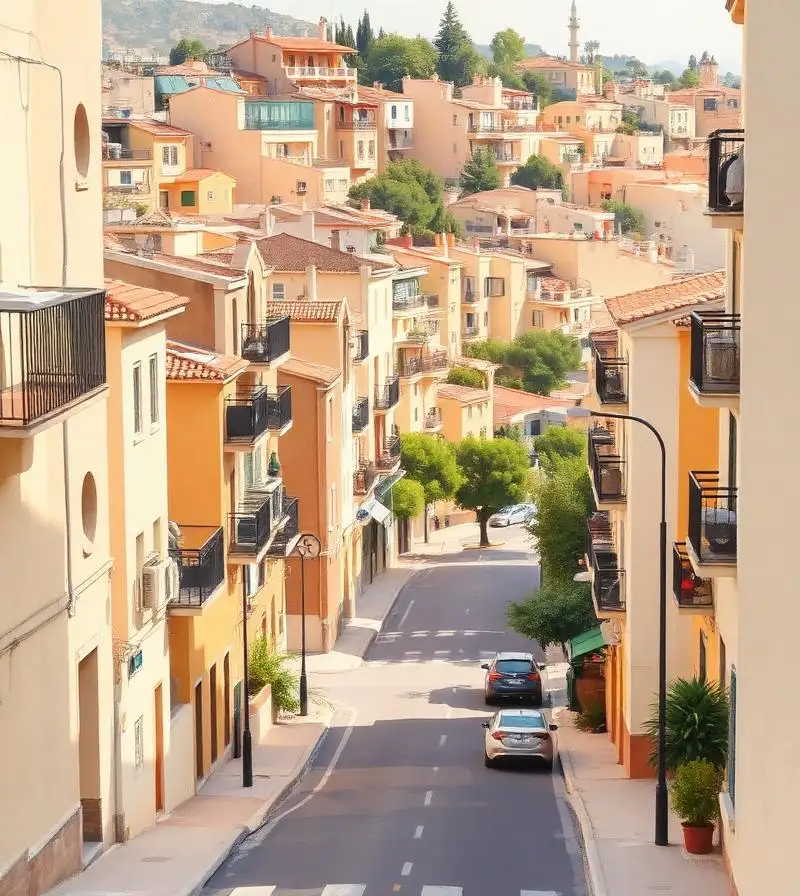
Norte
190.000 - 440.000 €Indicative guide pricesIt is priced above the municipal asking figure, and it is rising more slowly than the municipality over the year. It asks more than twice what the eastern pedanías do.
Residential
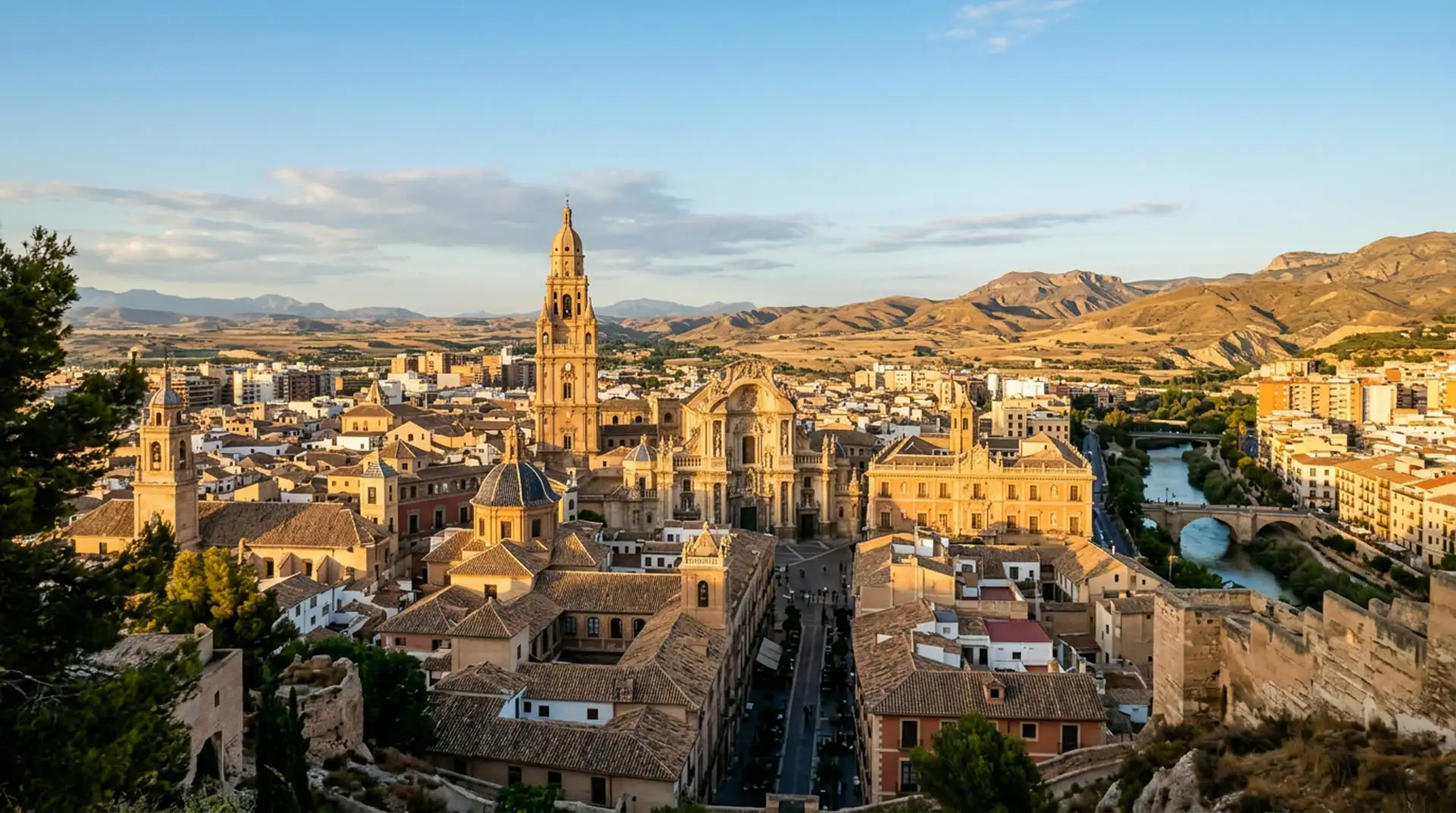
Nearly two thirds of Murcia lives outside Murcia. The urban core held 169,219 people of a municipal 471,982 on the 2024 census, and the rest live in the pedanias, the outlying villages and districts that share the city's name. The price index follows that split: of the six districts published for the city the dearest asks more than twice the cheapest, with the two Pedanias districts at the bottom.
Foreign nationals were about an eighth of residents on that same census, and the mix is not European-dominated: Africa is the largest continental group, ahead of America and then Europe. The 2021 census puts the mean age of foreign residents at 35 against 42 for Spanish nationals, which reads as working migration rather than retirement. No country-level breakdown for the municipality could be retrieved, so this guide names no individual nationalities.
Murcia is the region's rail hub, and one of its two commuter lines has not carried a train since October 2021. The C2 towards Lorca and Aguilas is operated by road along its whole length, so the 820,300 journeys recorded on it in 2025 were made by bus, as the regional statistics office states in its own footnote. Only the C1 to Alicante runs as rail. Adif has indicated autumn 2027 for trains as far as Lorca, slipped from spring 2026, and no date at all is published for the stretch beyond.
The verdict
The upside is real. So is the downside. Both matter more than any brochure will admit.
The region's rail hub, and the C1 actually runs
Murcia del Carmen is the hub of both regional Cercanias lines, and the C1 to Alicante carried 2,169,800 passengers in 2025 as rail. Of the two Cercanias lines in the whole region, it is the one where trains are running.
Three reference hospitals inside the municipality
The municipality is split across three health areas, each with its own reference hospital and all three inside it: Virgen de la Arrixaca for Murcia Oeste, Morales Meseguer for Vega Media del Segura and Reina Sofia for Murcia Este.
A weather station inside the municipality
AEMET publishes normals for station 7178I, at 62 metres inside the municipality. Only three stations in the whole region have published normals, and a second of them, Alcantarilla Base Aerea, AEMET files under Murcia despite Alcantarilla being a separate municipality.
An airport with a route list weighted to Britain
Nine of the seventeen destinations listed for Corvera when we read the page in August 2026 were in the United Kingdom. Aena separately gives twenty-three routes for calendar 2025, and 949,007 passengers, that passenger figure marked provisional.
The cheaper districts are where the movement is
Pedanias Oeste, the second cheapest of the six districts published for the city, recorded the largest annual rise to July 2026, while Norte, the dearest, recorded much the smallest.
The C2 has not carried a train since 2021
Renfe operates the whole Murcia to Lorca and Aguilas route by road, and its August 2025 network map legends the line as interrupted. The passenger figures published for it are bus passengers, which the regional statistics office states in a footnote.
A Murcia address may be a pedania
Most of the municipality's residents live outside the urban core, in outlying villages and districts that share the city's name. Establish which of the six published districts a listing sits in before you compare it to anything.
Nothing about this city is coastal
Murcia is the inland regional capital. A buyer arriving from a coastal search should reset here, and look instead at our guides for Cartagena, Mazarron and Aguilas if the sea is the point.
No school figures we could source
The regional statistics office publishes pupil and centre counts by municipality, but only Cartagena's page was reachable, and both the national British Council bilingual-school list and the regional open-data school-location dataset are blocked to automated readers. We name no school here.
Nationality detail stops at continent
The census gives the foreign population by continent for this municipality but no country breakdown we could retrieve, so this guide names no individual nationalities here. The language prevalences shown are an editorial estimate, not a measured figure.
Editor's note
Murcia suits a buyer who wants an inland regional capital rather than a resort, and who does not need the sea. It has three reference hospitals inside its own boundaries, a weather station inside the municipality, and the one Cercanias line in this region that carries trains rather than buses. The trade is that most of the municipality is pedanias rather than city, so a Murcia address tells you much less than it appears to, and the district a listing sits in decides more than the city figure does. If the sea is the point, Cartagena is a city too, with a port and a Roman theatre, and it has working long-distance and medium-distance rail even though neither Cercanias line reaches it. Aguilas is smaller and cheaper than Murcia. Mazarron is smaller but dearer, and rising faster than Murcia, Cartagena or Aguilas, so do not assume a coastal town here is the cheaper option. Bear in mind too that the Cercanias line that would reach Aguilas is the one operated by road.
station: Murcia (7178I)
Average 1984-2010 · AEMET
Updated 30 Aug 2026
INE Annual Population Census, nationality basis, 1 January 2025
Where to live and what to expect at each price point.
It is priced above the municipal asking figure, and it is rising more slowly than the municipality over the year. It asks more than twice what the eastern pedanías do.
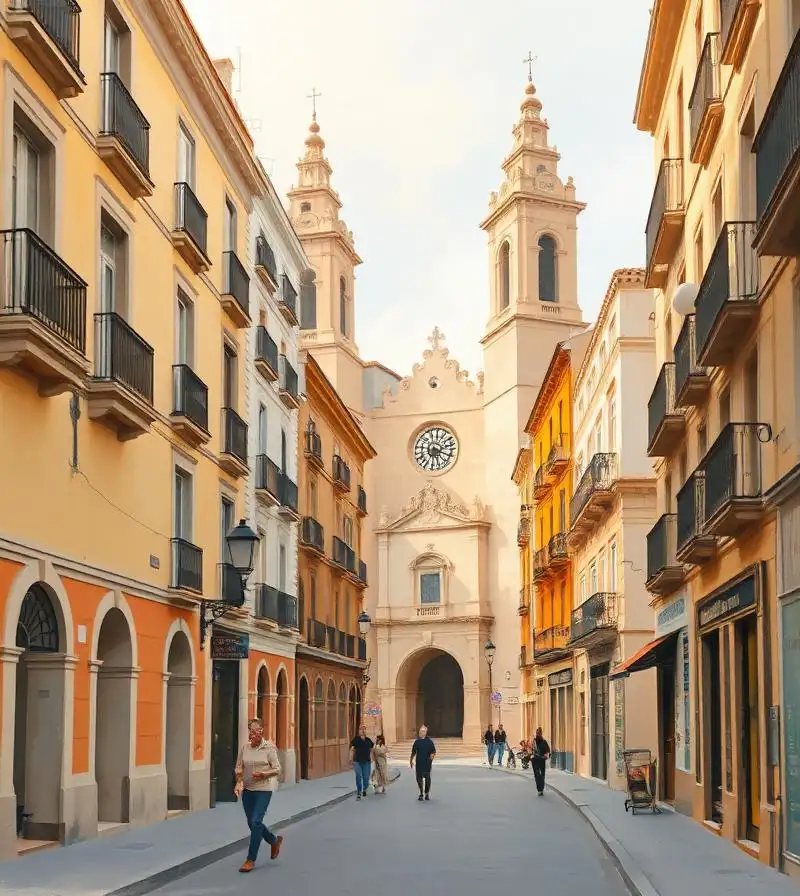
It is priced above the municipal asking figure. This is the compact, walkable Murcia that most buyers picture when they read the municipality name on a listing.

Mid-table on price and mid-table on movement among the six districts. It carries the municipal name but it is not the city centre, so establish exactly where an address sits before comparing it with one that is.
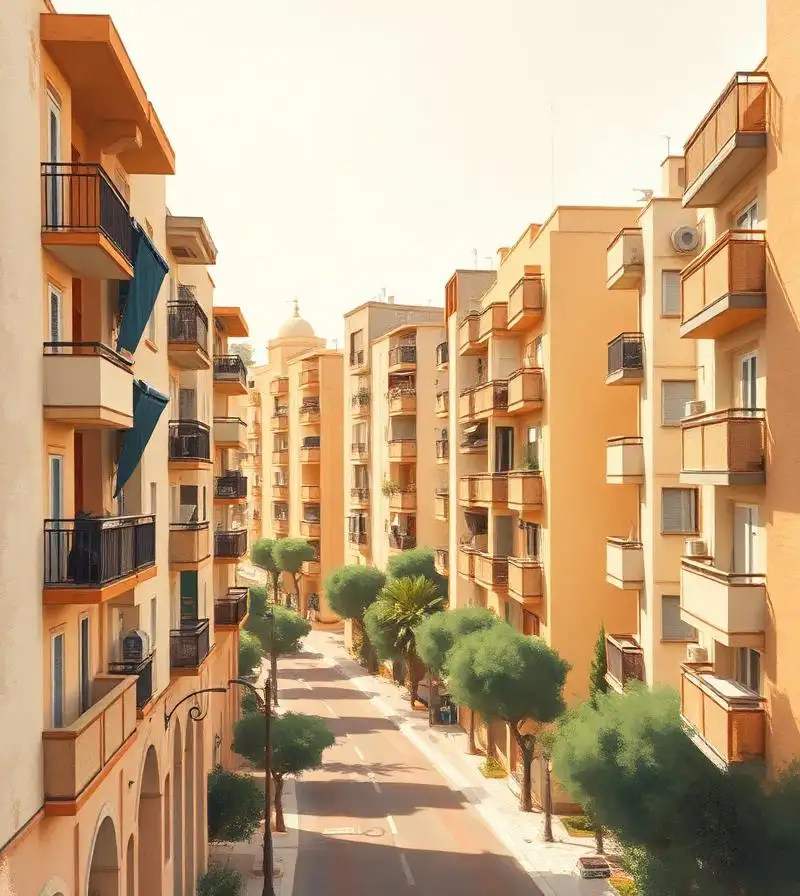
The southern side of the city.

The western pedanías, the outlying settlements where most of the municipality lives rather than the city proper. It is priced below the municipal asking figure, and it is rising faster than the municipality over the year.

It is priced below the municipal asking figure.
Honest answers to the questions buyers actually ask.
Transfer tax rates as of August 2026. Rates are set per autonomous community and do change. Confirm the current figures with a Spanish lawyer or tax adviser before you budget.
The pros and the cons of every town, with sourced data on prices, climate and costs.
Your property search, saved cities, mortgage calculator and a step-by-step buying guide, from your first search to getting the keys.
Local agents who speak your language, and owners selling their own home, contact you about homes that fit your search.
Agents and owners ask to connect first. Your contact details are only shared with the people you accept.
Our comprehensive guide covers everything foreign buyers need to know - from NIE numbers and residency permits to mortgages and legal requirements.
Use our free mortgage calculator to estimate monthly payments, compare loan scenarios and understand the true cost of buying in Spain.